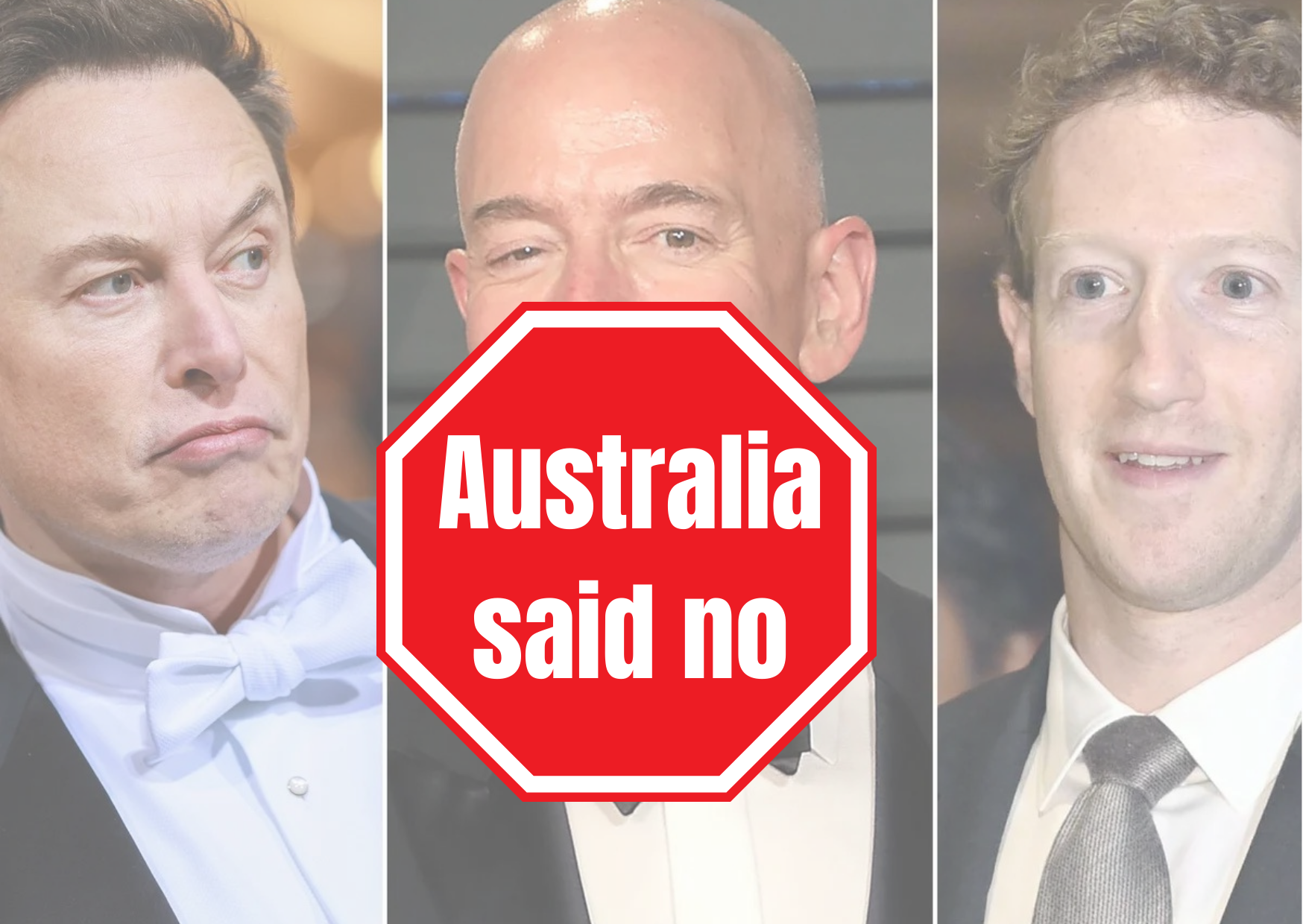
Australia Said No to big tech.
Dr Michael Carr-Gregg, AO
February 3, 2026
This week, Big Tech is on trial in the United States — and childhood is the evidence. For years, parents were told they were overreacting. Teachers were told they didn’t “get” technology. Clinicians were told the evidence was “mixed”.
Now a courtroom is asking a different question: What did tech companies know about harm to young people — and what did they do anyway? Let’s be clear: this is not a debate about screen time. It never was. It’s about design choices — engineered to maximise engagement, emotional reactivity, comparison and compulsive use, all during the most vulnerable period of brain development.
This isn’t accidental. Internal documents already show that adolescent psychology wasn’t ignored — it was systematically studied, understood, and leveraged. Reward sensitivity, novelty-seeking, poor impulse control, sleep deprivation and identity formation weren’t protected. They were monetised.
For a decade, the defence has been familiar:
• “The evidence is inconclusive”
• “Correlation isn’t causation”
• “Most kids are fine”
All technically true but morally insufficient. In public health and psychology, we don’t wait until every child is harmed before acting. We intervene when risk is predictable, preventable, and scalable. This trial matters — not just legally, but culturally. It validates what the Australian Government, schools, families and clinicians have been observing for years: rising anxiety, sleep disruption, aggression, loneliness and distress didn’t appear out of nowhere. It also sends an important message to young people themselves:
You are not broken.
Your brain did not fail.
You were up against systems designed to be irresistible. Be clear, litigation alone won’t fix this. Childhood moves faster than courts. But this moment forces a long-overdue reckoning about responsibility, regulation, and whether powerful companies owe a duty of care to developing minds. Because the real question isn’t whether social media is “good” or “bad”. It’s this: What responsibility do corporations have when their products shape childhood — and what happens when they get it wrong? I hope decision-makers are paying attention.
Urgent Action Needed: Social Media’s Neglect of Our Children’s Safety
As a child and adolescent psychologist, I am deeply alarmed by the rampant exposure of young people to graphic violence on social media. The recent assassination of Charlie Kirk has tragically thrust this issue into the spotlight, revealing a shocking reality: social media companies are failing to protect our children from trauma that should never be normalized.

As a child and adolescent psychologist, I am deeply alarmed by the rampant exposure of young people to graphic violence on social media. The recent assassination of Charlie Kirk has tragically thrust this issue into the spotlight, revealing a shocking reality: social media companies are failing to protect our children from trauma that should never be normalized.
Every day, I see young clients haunted by horrific footage they've stumbled upon online. This is not just unfortunate; it’s an outright crisis. As whistleblower Frances Haugen stated, “Facebook prioritizes profits over safety.” This is not merely a corporate oversight; it’s a moral failure that endangers the mental health of our youth.
The technology exists to filter out this graphic content. Advanced algorithms can detect and remove violent material before it reaches users. We have seen this capability in action with other types of inappropriate content. So why are social media giants allowing violence to proliferate? The answer lies in their misplaced priorities, where engagement trumps ethics.
Recent studies have underscored the urgent need for change. Research from the Royal Society for Public Health found that the longer children spend on social media, the worse their mental health becomes. Specifically, children who spend more than two hours a day on social media are significantly more likely to report poor mental health, including anxiety and depression. This alarming data reinforces the idea that prolonged exposure to potentially harmful content is detrimental to our children.
As Australia's eSafety Commissioner, Julie Inman-Grant has emphasized, “We need a digital environment where young people can thrive.” She has been vocal about the need for greater accountability from tech companies, stating, “The onus is on platforms to ensure that harmful content is removed quickly and effectively.” This is critical, as the desensitization to violence among young people is alarming. They grow up believing that brutality is just a part of life, leading to anxiety, depression, and distorted perceptions of reality.
We, as parents, educators, and mental health professionals, must take a stand. It’s time to demand accountability from social media companies. We need stricter regulations that hold these platforms responsible for the content they host. Empty statements after tragedies are no longer enough; we need real change that prioritizes our children’s mental well-being.
Moreover, conversations about media literacy are crucial. It’s not just about shielding our children from graphic images; it’s about empowering them to critically assess what they see. We must equip them with the tools to navigate this violent landscape and understand its impact.
The assassination of Charlie Kirk is a wake-up call. We cannot allow this moment to pass without demanding change. As Haugen warned, “The system is rigged.” We must insist on transparency in content moderation and advocate for safer online spaces. Inman-Grant has also pointed out, “If we want to see the change, we need to be the change.” Our children’s mental health should never be sacrificed for profit.
We are not powerless in this fight. We can push for change and create environments where our children can thrive without the threat of violence in their feeds. The technology is available; it just requires our collective will to ensure it is used responsibly.
In conclusion, the urgency of this issue cannot be overstated. We must unite to hold social media companies accountable for their negligence. Our children deserve a future where they can navigate the online world safely, free from the trauma of graphic violence. It’s time to take action—our children’s well-being depends on it.