Finally, We’re Trusting GPs With ADHD. About Time.
Dr Michael Carr-Gregg AO, February 3, 2026
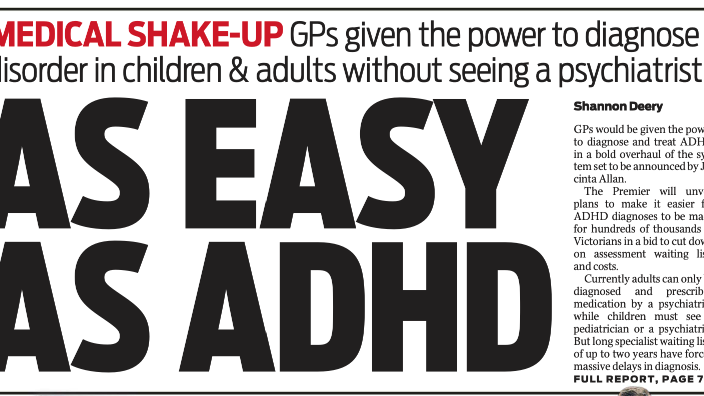
The Victorian government has announced that GPs will now be allowed to diagnose and treat ADHD in adults and children as part of reforms to reduce long waits and high costs for specialist assessment. The announcement includes an initial investment to train around 150 GPs by September 2026 so they can expand their scope to safely diagnose, treat and prescribe for ADHD. Putting aside the fact that four other states/territories (Queensland, NSW, WA, and SA) had either already implemented or announced reforms - this is a great move.
Cue the pearl-clutching. Cue the think pieces about “over-diagnosis.” Cue the sudden concern for patient safety from people who have never tried to book a psychiatrist or a paediatrician in this state. But for anyone who actually lives with ADHD — or loves someone who does—this reform isn’t radical. It’s long overdue.
For years, ADHD has been treated like a niche, specialist-only condition, as if recognising a lifelong neurodevelopmental disorder requires a crystal ball and a three-year waitlist. Adults have been bounced between referrals, told their symptoms are “stress,” “anxiety,” or a personality flaw, and left untreated while their lives quietly unravel. Parents have watched their kids struggle at school while paperwork crawls through a system designed for scarcity, not care.
All the while, the evidence has been clear: ADHD is common, well-researched, and treatable. And GPs—who already diagnose and manage depression, anxiety, diabetes, asthma, and countless other chronic conditions—are more than capable of doing this work. The idea that only psychiatrists can safely diagnose ADHD has never really been about safety. It’s been about gatekeeping.
In Victoria, opposition or strong caution about expanding GPs’ role in diagnosing and treating ADHD (especially prescribing stimulants) has mainly come from psychiatrists (via their professional bodies. Let’s be honest about what the old system produced. It didn’t protect patients; it delayed care. It didn’t ensure rigour; it ensured privilege. If you had money, time, and the ability to navigate a labyrinth of referrals, you got help. If you didn’t, you were told to cope better, try harder, or wait another year. That’s not clinical excellence. That’s rationing dressed up as caution.
GPs are already the backbone of our health system, especially for children and teenagers. They know their patients. They see the full picture—mental health, physical health, family context, history over time. They are often the first to suspect ADHD, and until now, they’ve been forced to stop just short of actually helping. This reform closes that absurd gap.
It also reflects a reality policymakers have been slow to accept: ADHD doesn’t magically appear in childhood and vanish at 18. Adults have ADHD. Women have ADHD. People who weren’t disruptive at school, who internalised their struggles, who masked and compensated and burned out quietly—have ADHD. These are the very people most likely to fall through a specialist-only system.
Critics warn this change will lead to “over-diagnosis.” But what they really mean is more diagnosis. And when a condition has been systematically under-recognised for decades, that’s not a problem—it’s a correction. We don’t accuse GPs of “over-diagnosing” asthma because more people get inhalers. We don’t panic about “too much depression” when antidepressants become more accessible. We recognise unmet need. ADHD should be no different.
Of course, this doesn’t mean every GP suddenly becomes a lone cowboy/cowgirl handing out scripts. Training, guidelines, and clear pathways matter. Complex cases will still need specialists. Safeguards should exist. None of that is incompatible with trusting GPs to do what they already do every day: assess, diagnose, monitor, and refer when needed. What is incompatible is a system that treats ADHD like a rare indulgence instead of a mainstream health issue.
This reform is about more than efficiency. It’s about dignity. It’s about believing patients when they describe their own lives. It’s about recognising that long waitlists are not a virtue, and suffering is not a prerequisite for care. Victoria hasn’t lowered the bar. It’s removed an unnecessary wall. And for thousands of people who’ve spent years stuck on the wrong side of it, that’s not just policy. It’s relief. Finally.